Educational
Tracking Your Portfolio Against Analyst Calls: A KuberHunt Feature Deep Dive
Following a stock recommendation is easy. Remembering to actually check back on it, whether it hit its target, whether the stop loss triggered, whether the analyst has since updated their view, is where most investors quietly drop the ball. A Reco read once and never revisited isn't really being followed; it's just been seen. This is exactly the gap that tracking your portfolio against live analyst calls is meant to close.
The Problem With Following a Tip and Forgetting It
Most investors don't lose money because they followed bad research. They lose money because they followed good research and then never checked whether the conditions that made it good were still true. A Buy call with a ₹540 target and a ₹420 stop loss is only useful if you actually revisit it: has the stock moved toward the target, has it approached the stop loss, has the analyst issued an update?
Without a system to track this, a portfolio built on ten different Recos from different analysts, published on different days, becomes almost impossible to actively manage. You either check obsessively, which isn't sustainable, or you don't check at all, which defeats the purpose of following research backed calls in the first place.
What "Tracking Against Analyst Calls" Actually Means
Rather than treating a Reco as a one time tip, tracking it against your portfolio means keeping your actual holdings and the live status of the recommendations behind them in the same view, so you can see, at a glance, whether a stock you hold is:
Still within its recommended range, moving as the analyst's thesis expected.
Approaching its target, which may be a natural point to consider booking gains, per the analyst's own view.
Nearing its stop loss, which is exactly the signal a stop loss exists to give you, before the loss deepens.
No longer actively covered, if the analyst has closed or updated the call since you first acted on it.
This turns a Reco from a static piece of research you read once into something you can actually manage a position against, over the life of the recommendation rather than just at the moment you first saw it.
Why This Matters More With Multiple Analysts
The value compounds when you're following more than one SEBI registered Research Analyst, which is the entire point of not relying on a single source (see our piece on why diversifying research sources matters). If you're holding a stock based on one analyst's Buy call while a second analyst covering the same stock has since turned cautious, that's exactly the kind of divergence worth knowing about, not discovering weeks later when the price has already moved.
Tracking your holdings against active Recos, rather than each Reco in isolation, is what surfaces that kind of signal in the first place.
Where This Lives on KuberHunt
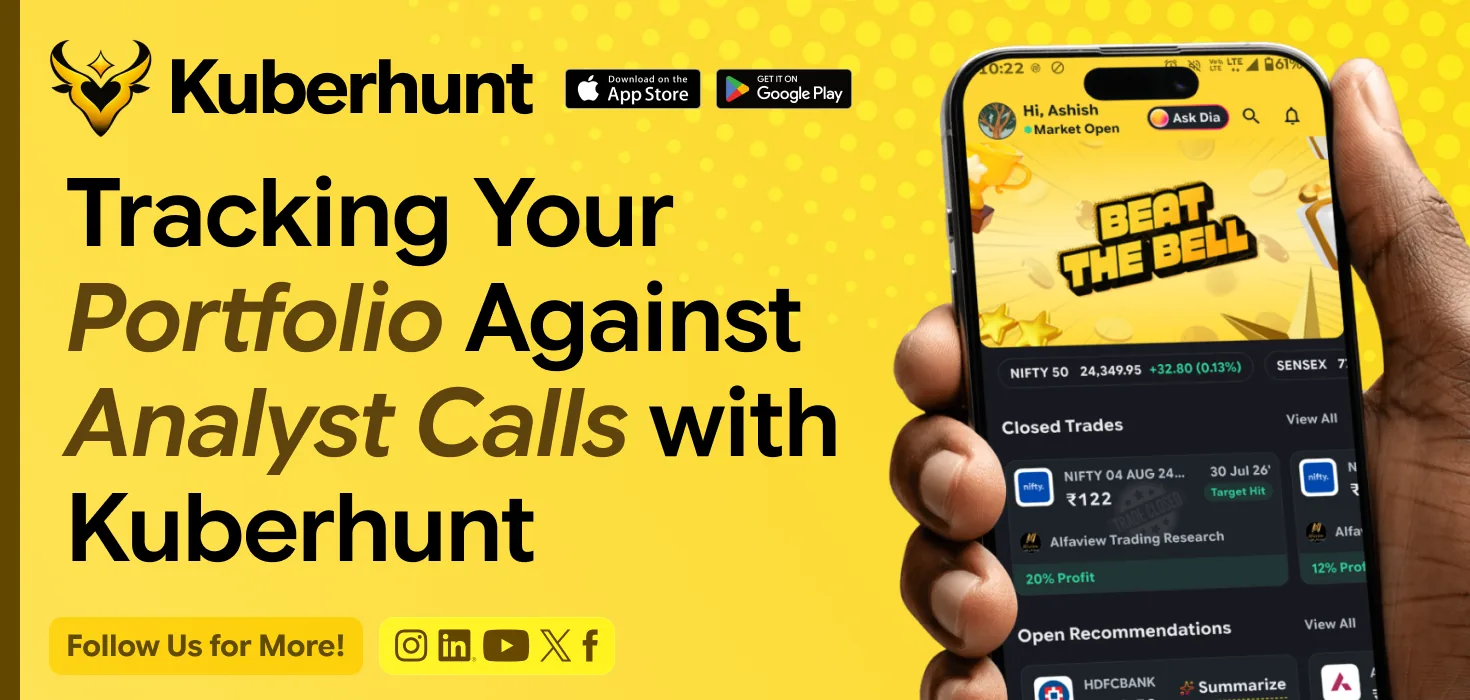
On KuberHunt, this shows up as the connective tissue between what you're actually holding and the Recos you've followed, under sections like My Recos, where the calls you're tracking sit alongside their current status, rather than scattered across screenshots, saved messages, or a dozen browser tabs. The goal is straightforward: your portfolio and the research behind it, in the same place, instead of two things you have to mentally reconcile yourself every time you check the market.
What to Actually Do With This Information
Tracking isn't the same as reacting to every tick. A stock sitting comfortably within its entry to target range doesn't need daily attention. It needs attention at the moments that matter: approaching a target, approaching a stop loss, or a fresh update from the analyst covering it. Building the habit of checking at those moments, rather than constantly or not at all, is what actually turns a tracked Reco into a well managed position.
The Bottom Line
A recommendation is only as good as your ability to act on its full lifecycle, not just the entry, but the exit conditions the analyst built into it from the start. Tracking your portfolio against live analyst calls is what makes that possible without turning portfolio management into a full time job of remembering which stock came with which target and whose call it was in the first place.
Disclosure: This article is published by KuberHunt for informational and educational purposes. KuberHunt is a technology and research distribution platform connecting investors with SEBI-registered Research Analysts and Investment Advisors. KuberHunt itself is not a Research Analyst or Investment Adviser and does not provide investment advice, create, or endorse any specific investment recommendation. This article does not constitute investment advice, and should not be used as the basis for any buy, sell, or hold decision on any security mentioned. Readers should consult a SEBI-registered professional before making investment decisions.
Investments in securities are subject to market risks. Read all related documents carefully before investing. Registration granted by SEBI and certification from NISM in no way guarantee performance or assure returns.
Educational content, not investment advice. Markets carry risk; read the disclosures on any Reco before you act on it.