

In a significant move to empower borrowers and enhance credit flexibility, the Reserve Bank of India (RBI) has announced a ban on foreclosure and pre-payment charges for floating-rate loans, effective
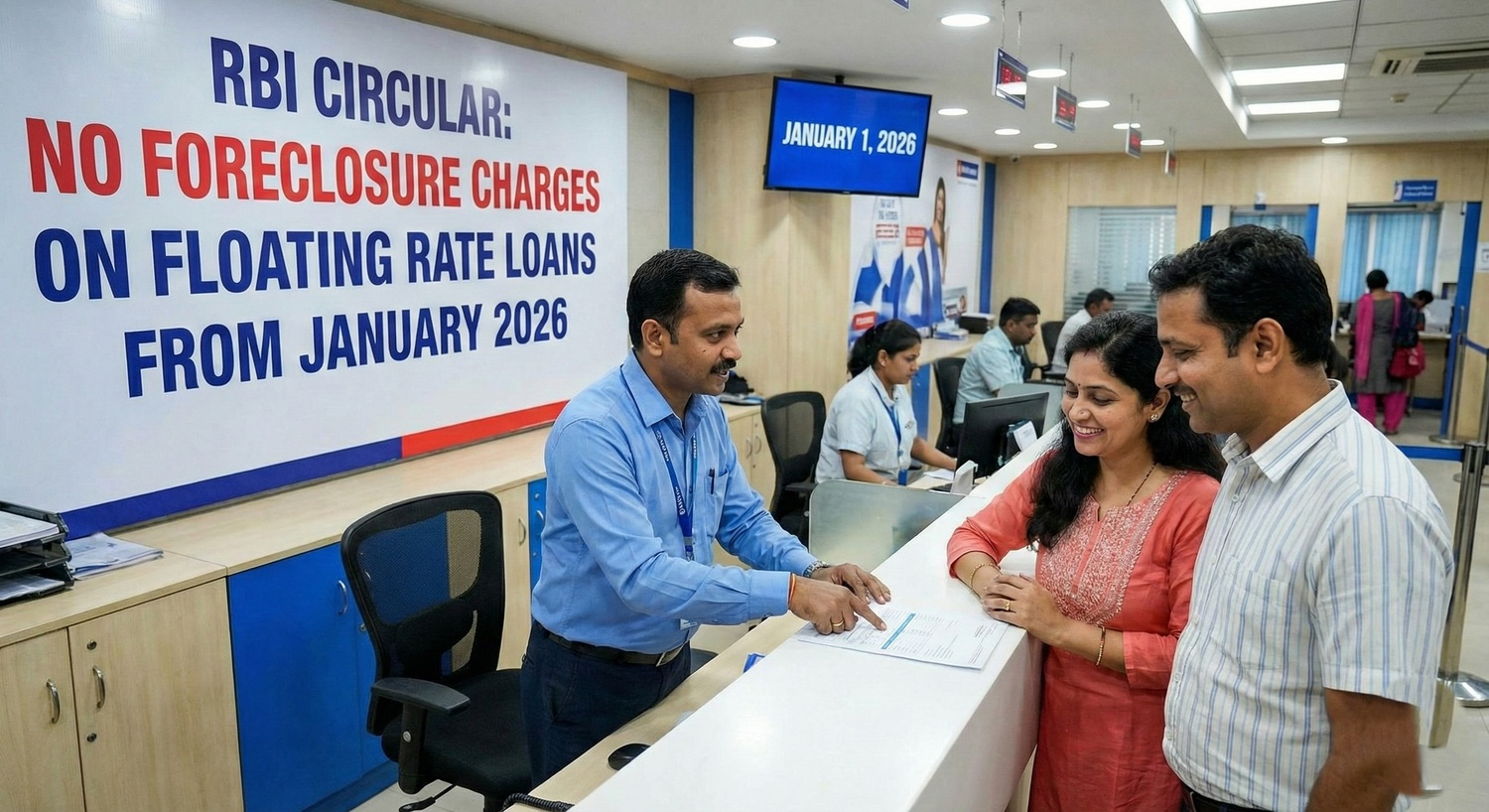
In a significant move to empower borrowers and enhance credit flexibility, the Reserve Bank of India (RBI) has announced a ban on foreclosure and pre-payment charges for floating-rate loans, effective January 1, 2026.
This new directive, formalized under the RBI (Pre-payment Charges on Loans) Directions, 2025, aims to eliminate the financial penalties that often discourage borrowers from paying off their debts early.
Who Benefits?
The waiver applies to two primary categories:
Individuals: No pre-payment charges will be levied on floating-rate loans taken for non-business purposes (e.g., home loans, personal loans).
Micro and Small Enterprises (MSEs): Small businesses taking floating-rate loans for business purposes are now exempt from these penalties, a move expected to boost financial liquidity for entrepreneurs.
Key Provisions:
The rules apply to all loans sanctioned or renewed on or after January 1, 2026.5 The directive covers Commercial Banks, Non-Banking Financial Companies (NBFCs), and Co-operative Banks.6 However, for certain institutions like Small Finance Banks (SFBs) and Regional Rural Banks (RRBs), the waiver is capped at loans up to ₹50 lakh.
Why This Matters?
Previously, lenders often imposed "lock-in" clauses or heavy penalties to prevent borrowers from switching to banks offering lower interest rates.
By removing these barriers, the RBI is fostering a more competitive lending environment. Borrowers can now refinance or foreclose their loans without fear of hidden costs, ultimately reducing their long-term interest burden.