
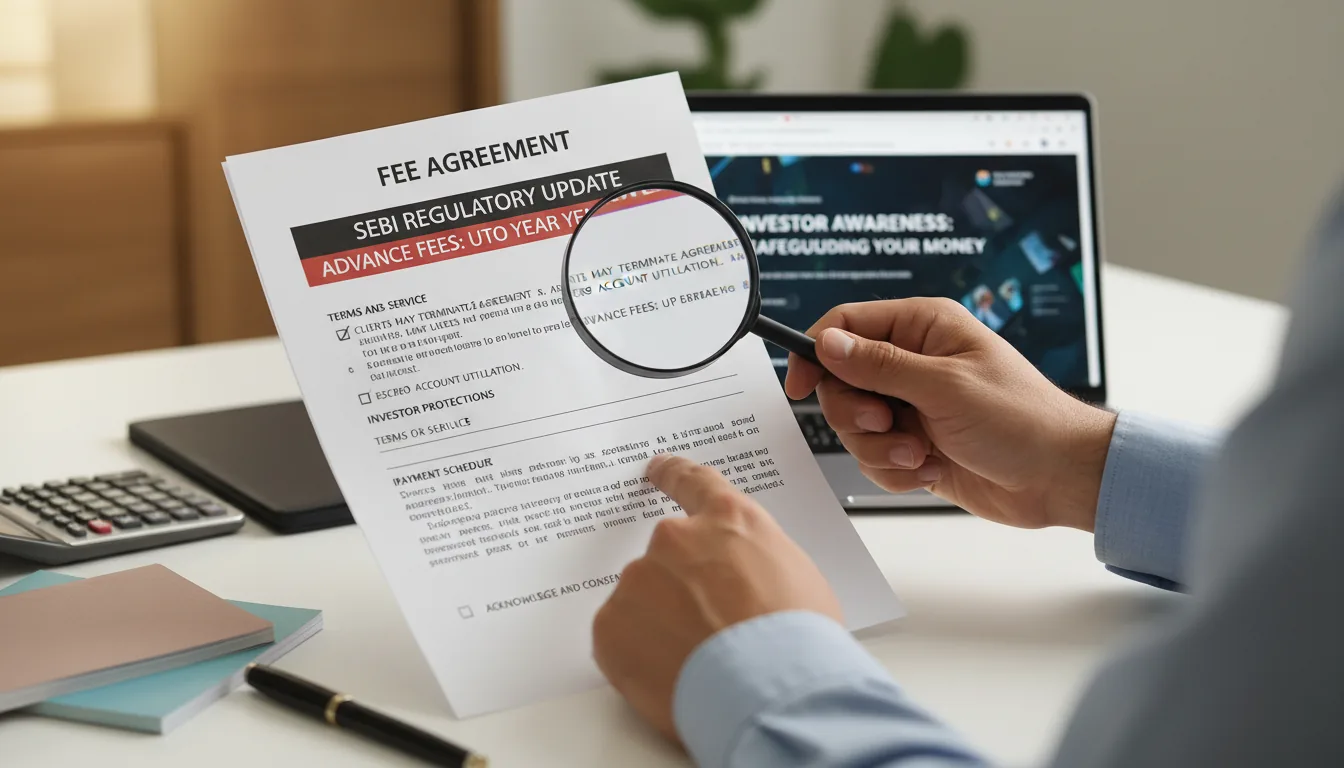
SEBI now lets RAs and IAs charge advance fees for up to a year — but there are protections most investors never use. Here's how to read a fee agreement and keep your money safe.
Paying for stock research feels like a leap of faith. You hand over money before you've seen a single recommendation, and you hope the person on the other end is as good as their marketing says. For years, the rules around how much advisors could charge upfront were tight precisely because regulators knew this trust gap could be abused.
That changed recently — and most retail investors have no idea. Understanding the new fee rules is one of the simplest ways to protect yourself before you ever subscribe to a Research Analyst (RA) or Investment Adviser (IA).
## What actually changed
For a long time, SEBI restricted how far in advance a Research Analyst could collect fees. An RA could only charge a quarter's fee upfront, while Investment Advisers were capped at two quarters. The logic was protective: if you can only collect a small amount in advance, you can't run away with a year of someone's money.
But that short window created a side effect. Analysts complained it discouraged them from offering genuine long-term recommendations — why build a 12-month thesis if you can only bill for three? SEBI listened, ran a consultation, and relaxed the rule. Advisors and analysts can now charge advance fees for up to one full year.
This is good for serious, long-horizon research. It also means more of your money can sit with a provider upfront. So the responsibility shifts to you: know what you're agreeing to before you pay.
## The protections that still exist
The longer fee window does not remove your safeguards. A compliant SEBI-registered professional still operates under strict conditions, and you should treat these as your personal checklist:
- A signed agreement is mandatory. No registered RA or IA can take your money without a documented terms-of-service agreement that spells out fees, scope, and what you're actually getting.
- Fees must be reasonable and transparent. The agreement should state the exact amount, the billing period, and the mode of payment. Vague "premium membership" pricing with no breakdown is a warning sign.
- The advance is a ceiling, not a default. "Up to one year" does not mean you must pay a year upfront. You can negotiate shorter terms, especially when trying a new service.
- Refund terms should be in writing. Understand, before paying, what happens if you want to exit early. A professional outfit will have a clear answer.
## Questions to ask before you pay a single rupee
Use these every single time, regardless of how impressive the track record looks:
1. What is your SEBI registration number, and is it currently valid? A registration number that begins with INH is for Research Analysts. Verify it yourself rather than trusting a screenshot.
2. What exactly am I paying for, and for how long? Daily calls? A model portfolio? Periodic reports? Get the scope in writing.
3. What is your refund policy if I'm not satisfied? The answer reveals how the business treats clients who leave.
4. How do you disclose conflicts of interest? A trustworthy analyst tells you when they hold a position in something they're recommending.
5. Will every recommendation come with complete parameters? Entry, target, stop-loss, and rationale — not just a stock name and a rocket emoji.
If a provider gets defensive or evasive about any of these, that is your answer.
## Why this matters more than the rate itself
People obsess over whether a subscription costs ₹2,000 or ₹20,000. That's the wrong focus. A cheap subscription that gives you reckless tips will cost you far more in trading losses than the fee ever saved you. An expensive one that protects your capital and teaches you discipline can pay for itself many times over.
The fee rules exist to make the relationship transparent. The new one-year window is a convenience, not a trap — as long as you read what you sign. The investors who get burned are almost never the ones who asked too many questions. They're the ones who paid first and read later.
## The bottom line
The advance-fee rule was relaxed to encourage genuine long-term research, and that's a net positive for serious investors. But more flexibility on the provider's side means more diligence is required on yours. Verify the registration, demand a written agreement, understand the refund terms, and never let urgency or a flashy track record rush you into paying.
A real professional will welcome these questions. Anyone who won't answer them has just told you everything you need to know.
---
*This article is for educational and informational purposes only and does not constitute investment advice. Investments in securities are subject to market risks. Always verify a professional's SEBI registration and read all agreements carefully before subscribing. Consult a qualified, registered professional for guidance specific to your situation.*