If you've spent any time on a SEBI Research Analyst marketplace lately, you've probably hit three product names that all sound similar but mean very different things: Modelfolio, Reco Plan, and Algo S
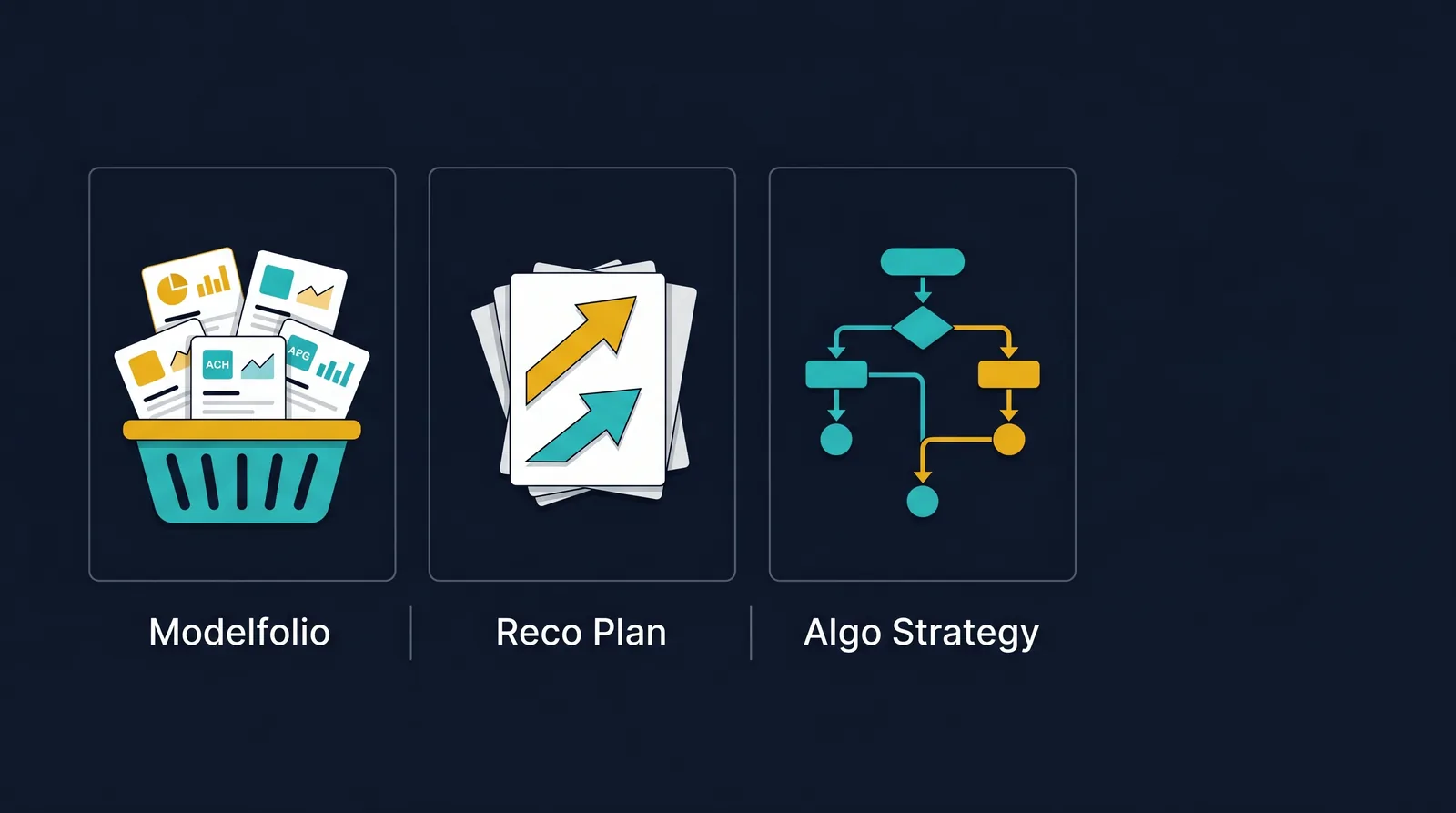
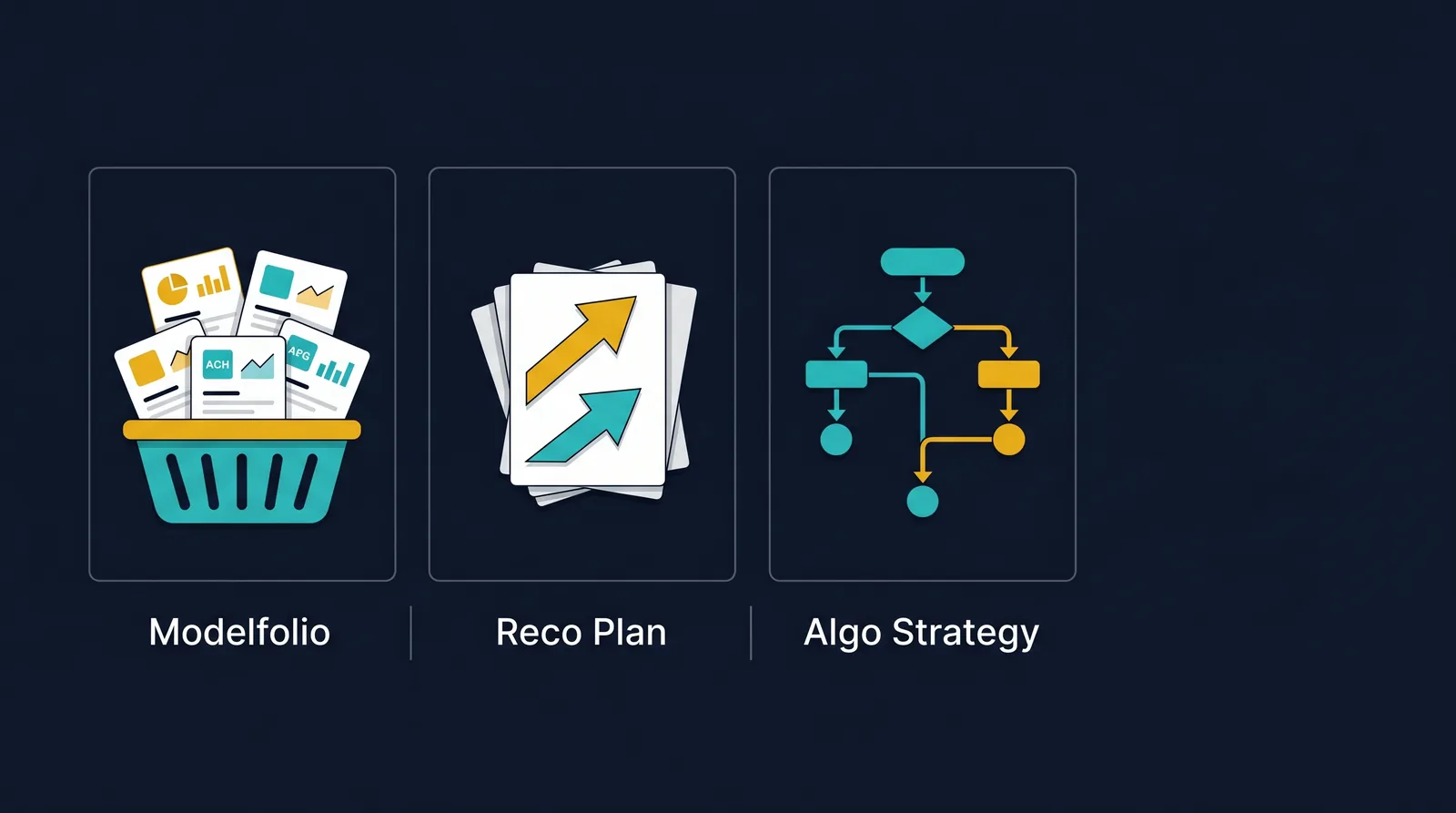
If you've spent any time on a SEBI Research Analyst marketplace lately, you've probably hit three product names that all sound similar but mean very different things: Modelfolio, Reco Plan, and Algo Strategy.
Most retail investors pick one without really understanding what they're buying. That's a mistake — because each of these works differently, suits a different kind of investor, and produces a very different experience.
Here's what each one actually is, and how to figure out which one fits how you trade.
Modelfolio: a structured basket
Think of a Modelfolio as a curated multi-stock portfolio. The Research Analyst picks 5-15 stocks, assigns weightages (e.g., Stock A: 12%, Stock B: 8%, Stock C: 15%, etc.), defines an investment horizon (typically medium to long-term), and rebalances at predefined intervals — quarterly or semi-annually.
After SEBI's January 2025 model portfolio framework came into force, every legitimate Modelfolio must include:
• A clearly defined methodology (fundamental, technical, quantitative, or hybrid)
• Stated investment horizon — short (under 1 year), medium (1-3 years), or long (3+ years)
• Predefined rebalancing frequency
• Risk disclosures and a factsheet
• A relevant benchmark index (Nifty 50, Nifty Midcap, sector index, etc.)
• Validated past performance through a SEBI-approved Performance Validation Agency
Suited for: investors who want a 'hands-off' portfolio approach with periodic rebalancing — similar to mutual funds in feel, but with the transparency of seeing exact stocks and weightages, and the agility of changing them faster than an MF can.
Pricing typically: ₹1,000-₹3,000 per month for a single Modelfolio.
Reco Plan: tactical stock recommendations
A Reco Plan is the more active product. Instead of a structured portfolio, the RA sends out individual buy/sell recommendations as opportunities arise — usually with specific entry, stop-loss, and target levels.
Sub-types within Reco Plans:
• Intraday: positions taken and closed within the same trading session
• BTST (Buy Today Sell Tomorrow): held overnight, exited next session
• Swing: held a few days to a few weeks
• Positional: held weeks to months, often based on technical breakouts or earnings catalysts
Suited for: traders who actively monitor markets and want timely signals to act on. The discipline required is higher — you need to actually be at your terminal to execute, manage stop-losses, and exit at targets.
Pricing typically: ₹2,000-₹5,000 per month, depending on call frequency and complexity.
Algo Strategy: automated systematic trading
An Algo Strategy is a rules-based trading system. The RA defines clear, mechanical rules (e.g., 'enter long when 50-day moving average crosses 200-day moving average AND RSI is below 70'), and either you execute manually based on signals, or — increasingly — the strategy is plugged into an algo platform that executes automatically through your broker API.
Key features:
• Decisions are systematic, not discretionary
• Backtesting data showing how the strategy performed historically is usually included
• Drawdowns and performance metrics (Sharpe ratio, max DD, win rate) are typically disclosed
• AI-driven strategies are now allowed under SEBI's framework, but the RA must disclose the extent of AI use to clients
Suited for: investors who're comfortable with quantitative concepts, want to remove emotion from trading, and ideally have some technical setup (broker API access, an algo execution platform) ready to go.
Pricing typically varies widely — anywhere from ₹3,000 to ₹15,000 per month depending on the strategy's complexity and historical performance.
Side-by-side
Feature Modelfolio Reco Plan Algo Strategy
Format Curated multi-stock basket Individual buy/sell calls Rules-based system
Active monitoring Low (rebalance days) High (every signal) Low if automated
Holding period Medium-long term Intraday to swing Varies by strategy
Best for Hands-off investors Active traders Systematic / quant-minded
Effort needed Low High Medium (setup) → Low (run)
Typical monthly price ₹1k-3k ₹2k-5k ₹3k-15k
How to choose
If you have a full-time job and check markets twice a day at most: Modelfolio is almost certainly the right fit. The structure forgives infrequent attention.
If you actively trade and enjoy the process: Reco Plan, ideally one that matches your style (swing trader doesn't need intraday calls; intraday trader doesn't need positional holds).
If you have a background in quant, engineering, or systematic thinking — and a broker setup that supports automated execution: Algo Strategy. The barrier to entry is higher but the discipline is built in.
Can you stack them?
Absolutely — and many sophisticated retail investors do. A common combination: one Modelfolio for long-term wealth (₹2,000/mo), one Reco Plan for swing trading (₹3,000/mo), all comfortably within the SEBI ₹1,51,000 annual fee cap. The key is making sure each subscription serves a distinct purpose, not duplicating coverage.
What you should not do is subscribe to three intraday Reco Plans simultaneously. The signals will conflict, you'll burn out trying to track them, and the costs stack while the value doesn't.
Compare Modelfolios, Reco Plans, and Algo Strategies from SEBI-registered Experts on Kuberhunt → kuberhunt.com/experts
FAQs
Is a Modelfolio the same as a smallcase? Conceptually similar, structurally different. A smallcase is a basket published on the Smallcase platform (which has its own model). A Modelfolio under SEBI's January 2025 framework is a regulated research product from any SEBI-registered RA, with mandated disclosures and validated performance. The framework, not the platform, defines it.
Can a SEBI-registered RA legally automate trades on my behalf through an algo? Only if you've executed a separate Power of Attorney with a registered Portfolio Manager or used a regulated execution platform. The RA can provide the strategy and signals; actual order execution still goes through your broker, on your authorisation.
What happens to my Modelfolio holdings if I unsubscribe? The stocks are in your demat account, not the RA's. They remain yours regardless of subscription status. You just stop receiving rebalancing recommendations after the subscription ends.
How is Modelfolio performance validated under SEBI's new framework? SEBI established the Performance Validation Agency (PVA) framework alongside the model portfolio guidelines. Performance claims must be validated by a SEBI-approved agency, benchmarked against an appropriate index, and disclosed in the factsheet — preventing the cherry-picked performance screenshots that used to be common.